Herbal medicine is the medicine of the people. It is
simple, safe, effective, and free. Our ancestors used
-- and our neighbors around the world still use -- plant
medicines for healing and health maintenance. It's easy.
You can do it too, and you don't need a degree or any
special training. Ancient memories arise in you when
you begin to use herbal medicine -- memories which keep
you safe and fill you with delight. These lessons are
designed to nourish and activate your inner herbalist
so you can be your own herbal expert.
In our first session, we learned how to "listen"
to the messages of plant's tastes. In session two, we
learned about simples and how to make effective water-based
herbal remedies. The third session helped us distinguish
safe nourishing and tonifying herbs from the more dangerous
stimulating and sedating herbs. Our fourth session focused
on poisons in herbs and herbal tinctures, which we made
and then collected into an Herbal Medicine Chest.
In this, our fifth session, we will find out how to
help ourselves and our families with herbal vinegars,
one of the green blessings of the Wise Woman Way.
Why Use Herbal Vinegars?
Herbal vinegars are an unstoppable combination: they
marry the healing and nutritional properties of apple
cider vinegar with the mineral- and antioxidant- richness
of health-protective green herbs and wild roots. Herbal
vinegars are tasty medicine, enriching and enlivening
our food, while building health from the inside out.
Herbal vinegars are far better for the bones and the
heart than soy beverages. They have a reputation for
banishing grey hair and wrinkles. Sprayed in the armpits,
herbal vinegars are highly effective deodorants. As
a hair rinse (try rosemary or lavender vinegar) they
add luster and eliminate split ends.
Anything vinegar can do, including clean the kitchen,
herbal vinegars can do better.
Vinegars Seek Minerals
Minerals are important for the health and proper functioning
of our bones, our heart and blood vessels, our nerves,
our brain (especially memory), our immune system, and
our hormonal glands. No wonder lack of minerals can
lead to chronic problems and getting more can make a
big different in health in a few weeks. One of the best
way to get more minerals -- besides drinking nourishing
herbal infusions and eating well-cooked leafy greens
-- is to use herbal vinegars.
Vinegar and Your Bones
It is not true that ingesting vinegar will erode your
bones. Adding vinegar to your food actually helps build
bones because it frees up minerals from the vegetables
you eat and increases the ability of the stomach to
digest minerals. Adding a splash of vinegar to cooked
greens is a classic trick of old ladies who want to
be spry and flexible when they're ancient old ladies.
(Maybe your granny already taught you this?) In fact,
a spoonful of vinegar on your broccoli or kale or dandelion
greens increases the calcium you get by one-third. All
by itself, apple cider vinegar is said to help build
bones; when enriched with minerals from herbs, I think
of it as better than calcium pills.
Vinegar and Candida
Some people worry that eating vinegar will upset the
balance of gut flora and contribute to an overgrowth
of candida yeast in the intestines. Some people have
been told to avoid vinegar altogether. My experience
has led me to believe that herbal vinegars help health
those with candida overgrowth, perhaps because they're
so mineral rich. I've worked with women who have suffered
for years and kept to a strict "anti-candida"
diet with little improvement and seen them get better
fast when they add nourishing herbal vinegars (and fermented
foods such as sauerkraut, miso, and yogurt) to their
diets.
Making Herbal Vinegars
Fill any size jar with fresh-cut aromatic herbs: leaves,
stalks, flowers, fruits, roots, and even nuts can be
used. For best results and highest mineral content,
be sure the jar is well filled and chop the herb finely.
Pour room-temperature vinegar into the jar until it
is full. Cover jar: A plastic screw-on lid, several
layers of plastic or wax paper held on with a rubber
band, or a cork are the best covers. Avoid metal lids
-- or protect them well with plastic -- as vinegar will
corrode them.
Label the jar with the name of the herb and the date.
Put it some place away from direct sunlight, though
it doesn't have to be in the dark, and someplace that
isn't too hot, but not too cold either. A kitchen cupboard
is fine, but choose one that you open a lot so you remember
to use your vinegar, which will be ready in six weeks.
You can decant your vinegar into a beautiful serving
container, or use it right from the jar you made it
in.
Which Vinegar?
I use regular pasteurized apple cider vinegar from
the supermarket as the menstrum for my herbal vinegars.
I avoid white vinegar. Malt vinegar, rice vinegar, and
wine vinegar can be used but they are more expensive
and may overpower the flavor of the herbs.
Apple cider vinegar has been used as a health-giving
agent for centuries. Hippocrates, father of medicine,
is said to have used only two remedies: honey and apple
cider vinegar. Some of the many benefits of apple cider
vinegar include: better digestion, reduction of cholesterol,
improvements in blood pressure, prevention/care of osteoporosis,
normalization of thyroid/metabolic functioning, possible
reduction of cancer risk, and lessening of wrinkles
and grey hair.
Notes for Herbal Vinegar Makers
* Collect jars of different sizes for your vinegars.
I especially like babyfood jars, mustard jars, olive
jars, peanut butter jars and individual juice jars.
Look for plastic lids.
* The wider the mouth of the jar, the easier it will
be to remove the plant material when you're done.
* Always fill jar to the top with plant material and
vinegar; never fill a jar only part way.
*Really fill the jar. This will take far more herb
or root than you would think. How much? With leaves
and stems, make a comfortable mattress for a fairy:
not too tight; and not too loose. With roots, fill your
jar to within a thumb's width of the top.
* After decanting your vinegar into a beautiful jar,
add a spring of whole herb. Pretty.
My Favorite Herbal Vinegar
Pick the needles of white pine on a sunny day. Make
herbal vinegar with them. Inhale deeply the scent of
the forest. I call this my "homemade balsamic vinegar."
Using Your Vinegars
Herbal vinegars taste so good, you'll want to use them
frequently. Regular use boosts the nutrient level of
your diet with very little effort and virtually no expense.
* Pour a spoonful or more on beans and grains as a condiment.
* Use them in salad dressings.
* Add them to cooked greens.
* Season stir-frys with them.
* Look for soups that are vinegar friendly, like borscht.
* Substitute herbal vinegar for plain vinegar in any
recipe.
* Put a big spoonful in a glass of water and drink it.
Try it sweetened with blackstrap molasses for a real
mineral jolt. Many older women swear this "coffee
substitute" prevents and eases their arthritic
pains.
Coming up
In our next sessions we will learn more about herbal
medicine making, with a focus on oils, explore the difference
between fixing disease and promoting health, learn how
to apply the three traditions of healing, and how to
take charge of our own health care with the six steps
of healing.
Experiment Number One
Test vinegar's ability to absorb minerals. Put a fresh
bone in a jar and completely cover it with vinegar.
What happens? Does the bone becomes pliable and rubbery?
How long does it take? Will eating vinegar dissolve
your bones? Only if you take off your skin and sit in
it for weeks!
Experiment Number Two
Make egg shell vinegar. Fill a jar one-quarter full
of vinegar. Drop crushed egg shell into it. What happens?
Does the vinegar foam? How long does it take? Egg shells
are exceptionally rich in bone-building minerals. Can
you taste the calcium in this vinegar? Add some egg
shell to your other vinegars if you wish to increase
their ability to keep your bones strong.
Experiment Number Three
Make four or more vinegars with the same plant, using
different types of vinegar, including both pasteurized
and unpasteurized apple cider vinegar. (For the others,
use rice vinegar, malt vinegar, wine vinegar, or even
white vinegar, but not umeboshi vinegar.)
Taste your vinegars daily for a week, then weekly for
five more weeks. You may, if you wish, decant some of
your vinegars for use after six weeks. But you may also
wish to keep observing them as they age (for years,
if you wish). I have some vinegars which are more than
thirty years old and still in good shape. Note which
stay edible the longest, and what happens to those that
become inedible.
Experiment Number Four
Buy a quart or more of unpasteurized apple cider vinegar.
Use two cups to make several small herbal vinegars:
one with roots, one with leaves, and one with flowers.
Boil the other two cups. Make one herbal vinegar with
the boiling hot vinegar. Make another with the boiled
vinegar after it has cooled. Continue as in experiment
number three.
Further study
* Redo experiment number two using different kinds of
egg shells -- white ones and brown ones, store-bought
and farm-bought, from caged birds and free-range birds.
Can you see any differences? Taste or smell any differences?
* Make vinegars at different times of the year and compare
them.
Advanced work
* Unpasteurized vinegar can form a "mother."
In a jar filled with herb and vinegar, the vinegar mother
usually grows across the top of the herb, and looking
rather like a damp, thin pancake. Kombucha is a vinegar
mother. Does your local health food store sell mothers?
kombucha? What is a vinegar mother? Is it harmful?
* What is an ionic form of a mineral?
* What is a mineral salt?
* How do our bodies uptake and utilize minerals?
BOX 1
Plants That Make Exceptionally Good-Tasting Herbal Vinegars
Apple mint (Mentha sp.) leaves, stalks
Bee balm (Monarda didyma) flowers, leaves,
stalks
Bergamot (Monarda sp.) flowers, leaves, stalks
Burdock (Arctium lappa) roots
Catnip (Nepeta cataria) leaves, stalks
Chicory (Cichorium intybus) leaves, roots
Chives and especially chive blossoms
Dandelion (Taraxacum off.) flower buds, leaves,
roots
Dill (Anethum graveolens) herb, seeds
Fennel (Foeniculum vulgare) herb, seeds
Garlic (Allium sativum) bulbs, greens, flowers
Garlic mustard (Alliaria officinalis) leaves
and roots
Goldenrod (Solidago sp.) flowers
Ginger (Zingiber off.) and Wild ginger (Asarum
canadensis) roots
Lavender (Lavendula sp.) flowers, leaves
Mugwort (Artemisia vulgaris) new growth leaves
and roots
Orange mint (Mentha sp.) leaves, stalks
Orange peel, organic only
Peppermint (Mentha piperata and etc.) leaves,
stalks
Perilla (Shiso) (Agastache) leaves, stalks
Rosemary (Rosmarinus off.) leaves, stalks
Spearmint (Mentha spicata) leaves, stalks
Thyme (Thymus sp.) leaves, stalks
White pine (Pinus strobus) needles
Yarrow (Achilllea millifolium) flowers and
leaves
BOX 2
Weedy Herbal Calcium Supplement
Use one or more of the following plants to make
an herbal vinegar that can reverse and counter osteoporosis.
Dose is 2-4 tablespoons daily.
Amaranth (Amaranthus retroflexus) leaves
Cabbage leaves
Chickweed (Stellaria media) whole herb
Comfrey (Symphytum officinalis) leaves
Cronewort/Mugwort (Artemisia vulgaris) young
leaves
Dandelion (Taraxacum off.) leaves and root
Kale leaves
Lambsquarter (Chenopodium album) leaves
Mallow (Malva neglecta) leaves
Mint leaves of all sorts, especially sage, motherwort,
lemon balm, lavender, peppermint
Nettle (Urtica dioica) leaves
Parsley (Petroselinum sativum) leaves
Plantain (Plantago majus) leaves
Raspberry (Rubus species) leaves
Red clover (Trifolium pratense) blossoms
Violet (Viola odorata) leaves
Yellow dock (Rumex crispus and other species)
roots
BOX 3
Herbal Vinegars Where You Eat the Pickled Plants, too
Burdock
Chicory
Dandelion
Purslane
Yellow Dock
Rosehips
Raspberries/blackberries
For permission to reprint this article, write to: susunweed@herbshealing.com
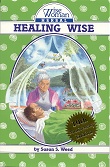
Healing
Wise http://www.ashtreepublishing.com/bookshop/healingwise.php
by Susun
S. Weed http://www.ashtreepublishing.com/bookshop/susunweed.php
Introduction by Jean Houston.
Superb herbal in the feminine-intuitive mode. Complete instructions for using common plants for food, beauty, medicine, and longevity. Seven herbs -- burdock, chickweed, dandelion, nettle,
oatstraw, seaweed, and violet -- are explored in depth.
A Special Tenth Anniversary edition of this
classic herbal, profusely illustrated. 312 pages.
Retails for $12.95
Read a Review
http://www.susunweed.com/herbal_ezine/Weed_letter_Dec-01.htm#book
Order HEALING WISE in our Bookshop
http://www.ashtreepublishing.com/bookshop/healingwise.php
I just started reading your book, Healing Wise. Your
humor and approach to life seem so "down-to-earth",
just like your favorite powerful weeds. Thank you for sharing
and nourishing! ~ Diane
Study with Susun Weed in the convenience of your home!
Choose from three Correspondence Courses: Green Allies,
Spirit & Practice of the Wise Woman Tradition, and
Green Witch - includes audio/video tapes, books, assignments,
special mailings, plus personal time.
Learn more at www.susunweed.com
or write to:
Susun Weed
PO Box 64
Woodstock, NY 12498
Fax: 1-845-246-8081
Visit Susun Weed at: www.susunweed.com
and www.ashtreepublishing.com
For permission to reprint this article, contact us at:
susunweed@herbshealing.com
Vibrant, passionate, and involved, Susun Weed has garnered
an international reputation for her groundbreaking lectures,
teachings, and writings on health and nutrition. She
challenges conventional medical approaches with humor,
insight, and her vast encyclopedic knowledge of herbal
medicine. Unabashedly pro-woman, her animated and enthusiastic
lectures are engaging and often profoundly provocative.
Susun is one of America's best-known authorities on
herbal medicine and natural approaches to women's health.
Her four best-selling books are recommended by expert
herbalists and well-known physicians and are used and
cherished by millions of women around the world. Learn
more at www.susunweed.com